

Psoriasis - Patients ask, Dr. Ringpfeil answers
Please feel free to use the blog below to share information about Psoriasis or to ask Dr. Franziska Ringpfeil a question that might be of interest to others.
| scalp | face/ neck/ ears/ genital | palms/ soles | remainder | |
|---|---|---|---|---|
| Narrowband UVB - Pharos excimer laser | effective | effective | effective | effective |
| Glycerin | lotion | cream | lotion/ cream | |
| Almond oil | yes | yes | ||
| Retinoid | gel/cream | |||
| Taclonex | solution | ointment | ointment | |
| Dovonex/ Vectical | solution | (cream) | ointment | Cream/ ointment |
| Topical steroid | lotion | cream/ointment | ointment | Cream/ointment |
| Tar | shampoo | cream | cream/ solution | |
| Protopic/ Elidel | + | |||
| Salicylic acid | Solution/ oil | ointment | Gel/ cream |
Dr. Ringpfeil: " If I had psoriasis I would remove all elements in my immediate environment that contribute to inflammation. Specifically, I would avoid animal protein and fat, as well as highly refined carbohydrates. I would also avoid
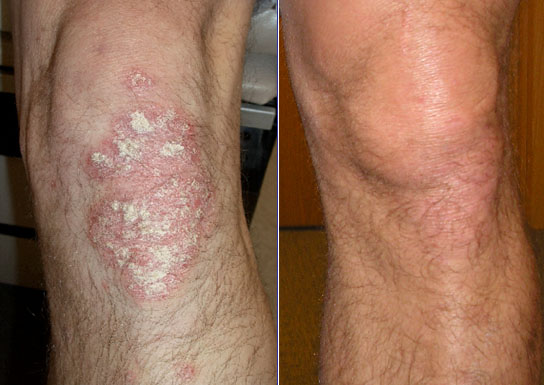
" My experience shows that when you suffer from psoriasis you can enjoy long lasting relief after just a series of short treatments. The laser treatment is safe and effective in removing skin plaques that may not respond to gels or creams, which carry the risk of harmful side effects.
Here are a few benefits that I find in the Pharos excimer laser:
Please note... this laser technology might not be the best solution if you have wide spread psoriasis over the entire body or if your psoriasis gets worse with sun exposure.
The excimer laser treatment is covered by most insurance plans after precertification. Our staff will be happy to communicate with your insurance to issue the precertification for you. "
Loading calendar…


I am a person of color and I’ve been having some scalp issues with flaking. It does not respond to typical dandruff treatments, hence the need for a dermatologist. Therefore, I am looking for someone who has successfully treated ethnic skin disorders. Have all of the doctors at this practice successfully treated ethnic scalp issues or is there one who specializes in this area?
The scalp condition, dandruff, is very common. For many people it is a trait that flares with stress or in the height of winter and summer when environmental conditions are extreme. Flares are called seborrheic dermatitis and definitely require intervention by a dermatologist. All of us at Ringpfeil Dermatology treat ethnic skin and take seborrheic dermatitis seriously.
HI. I have nail psoriasis (also scalp but that’s under control). I have been to two doctors. The first told me she doesn’t “do nails” and the second said she wouldn’t inject a nail in remission. I’m not sure what remission looks like but I just had to cut my nail almost completely off because it detached WAY down. Thumbs without nails aren’t a great look for work. I have band aides in my future!
Do you offer this treatment? Or could you provide any advice?
I really appreciate it!
We treat psoriasis of the nails. Injections are still standard of care but excimer laser treatment to the nail matrix might also be considered.
How differentiate between psoriasis seborrheic dermatitis?
On the scalp and face it can sometimes be difficult to tell these tow apart. The scale of psoriasis is often more silvery and that of seborrheic dermatitis is more coarse and yellow. However, when the skin of the scalp, ears and face is the only area affected, a biopsy will often be able differentiate them if the distinction is needed for treatment. Psoriasis affects areas other than the head and upper chest. If a characteristic rash is present on elbows, knees, palms, soles, belly button or in skin folds, a diagnosis of psoriasis is more likely.
I have been getting a general uvb treatment for my psoriasis and it has disappeared on most of my body. However, my elbows and some spots on my legs still remain. Is excimer laser treatment an option for those spots, or should I not do more uv-treatments this year since I already have been exposed to quite a lot of uv?
Excimer laser treatments only expose the psoriatic skin, not the unaffected skin, with a narrow wavelength in the UVB spectrum. There is no danger in overexposure with this method. Considering you success with UVB treatments, a focally higher dose of narrow band UVB will likely clear the stubborn areas on the elbows and shins.
On June 11 I went to see a dermatologist regarding my scalp psoriasis, and he told me to use an over the counter product, over night with a shower cap covering head. This is a know medical/over counter product from a reputable and good company. Obviously, this is not the proper way to use this product, and my scalp is burnt and head excruciatingly painful, unable to touch pillow with head to rest or sleep. The company does use a third party medical team to assist with problems, who have been very nice on the telephone; advising me to put Vitamen E, then slather scalp and head with pure Aloe and periodically use cold compresses. Today starts my fourth day of this , and wonder if you have any suggestions…I have not heard from the dermatologist who prescribed this treatment, therefore must move on to other assistance. Thank you for any help or suggestions you might offer me…
I am sorry to hear about your problems. You probably realize that a blog is not for personal medical advice. Please make an appointment with our office (you acn book online) or us the on-line consultation route on our home page.
I am currently working with my 3rd dermatologist diagnosed with a sever case of scalp psoriasis (finally with biopsy after being misdiagnosed for the first 1.25 yrs. I have tried every topical cream/gel/shampoo/mouse/oil available with no help. I am currently on treatment number 13 excimer laser with little to no benefit. 3 weeks post initiAtion of methotrexate up to 15 mg po weekly. Being followed by rheumatologist and testing for Psoriatic Arthritis. Suffering major hair loss over last 6 months. I am looking for help with hair loss. Has there been permanent damage to my hair follicles? Will my hair grown back? You came HIGHLY RECOMMENDED. Currently seeing Gottlieb in Exton. can you help in any way with my hair loss or current situation?
I am glad to read that you are in good hands. It can take excimer treatments some time to kick in and there is no harm in continuing topical treatment that reduces scale (salicylic acid) and reduces inflammation (e.G. Taclonex scalp solution or clobetasol foam) at the same time. If you are not totally grossed out by its messiness, you could have Dr Gotlieb’s office apply mineral oil just prior to the excimer treatments. Hair loss associated with severe scalp psoriasis is not unexpected but hair will almost always grow back once your psoriasis responds because psoriasis does not destroy hair follicles.
My son has scalp psoraisis treating w salicytic acid and gels . I habe Personal choice insurance and am intersted could you let us know the out of pocket cost upfront before treatment, Also where is your officwe located?
Scalp psoriasis can be treated in various ways and if salicylc acid does do not provide efficient relief, it may be time for prescription treatment. We participate with Personal Choice and submit the office visit or any in office treatments directly to your insurance plan. Depending on the contract that you have with your insurance, you may have a copay which is due at time of visit. Some benefit plans include deductibles (similar to car insurances) or copays. Your insurance customer service should be able to let you know these details.
How much do you charge for pharaoh laser treatments for psoriasis. I do not have insurance. How much is the cash price
Excimer laser treatments is useful when treating psoriasis involving less than 10% body surface area. For those without insurance, we currently charge $150 per treatment.
I am seeing a dermatologist in a few days to confirm a psoriasis diagnosis. I have been noticing just recently that my right hand an right elbow at times has a discharge. It is a golden color and looks like crumbs when it dries. Should I continue to wipe it away. Or leave it be and keep it clean and covered up? How concerned should I be?
Keep the areas clean by washing with warm water and soap and keep them covered with Vaseline and a band aid until seeing your dermatologist in a few days. If you notice new areas before evaluation by your dermatologist, you may want to see your primary doctor.
My son had a respiratory infection and 2 weeks later developed a rash that looked like chicken pox over his arms, legs, chest and back and was very itchy. A doctor did a biopsy and diagnosed it as either due to a bug bite or an allergic reaction and has been treating him with zyrtec. Previously, a course of prednisone helped but did not totally eliminate it. I think he has guttate psoriasis and needs to see someone who understands this condition and can treat it.
Psoriasis is not readily missed under the microscope, however, it could have been. If in fact guttate psoriasis is present now, it could have also occurred in an area of previous rash (this is called Koebner phenomenon).
Most of the time, guttate psoriasis can be diagnosed by a dermatologist visually because of characteristic color of the spots and their characteristic scale. Please make an appointment with your dermatologist.